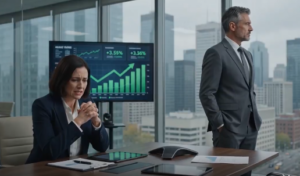
We are living through one of the most confusing economic eras in modern history.
By almost every objective measure, the data looks incredible. In America, total wealth is soaring, violent crime is hitting 20-year lows, and life expectancy is up. Yet, if you talk to the average person on the street—or look at the University of Michigan’s consumer sentiment index—you’ll find that public confidence has plummeted to a half-century low.
Axios recently dubbed this phenomenon the era of “The Rattled Generation.” Driven by the three-part shock of social media isolation, COVID-19 disruptions, and the dizzying rise of AI, people simply don’t know who or what to trust anymore.
But out of this fractured landscape comes a massive opportunity for the world of small business mergers and acquisitions (M&A). Here is how the “Rattled” era is actively shaping the mindset of small business buyers and sellers—and how you can navigate it.
1. The Seller’s Dilemma: Finding the Right Time to Exit
For small business owners, the current emotional climate can make the idea of selling feel incredibly daunting. When the news cycle is loud and institutional trust is low, human nature tells us to hunker down and hold onto what we control.
- The Valuation Gap: Sellers look at their strong financials and think, “My business is worth a premium.” But because they are “rattled” by macro-anxiety, they might hesitate to pull the trigger, fearing the unknown of life after exit.
- The Solution: Focus on what you can control. Buyers aren’t purchasing the global economy; they are purchasing your cash flow, your systems, and your local goodwill. If your internal data is clean, it will speak louder than the external noise.
2. The Buyer’s Mindset: Seeking Control in Chaos
Why are people still buying businesses in a jittery world? Because ownership represents the ultimate form of self-reliance. When you can’t trust big institutions, corporate employers, or traditional markets, buying a local business means taking control of your own destiny.
- The Flight to Quality: Today’s buyers are deeply skeptical. They are doing more due diligence than ever before because their baseline level of trust is low. They will stress-test your financials, question your customer concentration, and look closely at how AI might disrupt your business model.
- The Opportunity: If you are a buyer, this is your time to shine. While others are frozen by fear, sophisticated buyers recognize that main street businesses—like service providers, local manufacturing, and B2B trades—are remarkably resilient to digital disruption.
3. The New Currency of Dealmaking: Micro-Trust
The Axios article highlights a crucial shift: as people lose faith in massive institutions, they are migrating their trust closer to home—to local leaders, families, and their immediate employers.
In M&A, this means micro-trust is the ultimate deal-closer.
- Transparency is Mandatory: Any attempt to hide a flaw in a business during a sale will completely tank a deal. In a world already paranoid about misinformation and “fake” data, buyers will walk away at the first sign of a red flag.
- The Human Connection: Transactions are no longer just about the numbers on a spreadsheet. Sellers want to know their legacy and employees are safe. Buyers want a transparent transition period. Relationships matter more now than they did a decade ago.
💡 The Bottom Line: The macroeconomic landscape might feel unstable, but the micro-economy of small business remains incredibly robust. America’s unique advantage has always been its entrepreneurial spirit. For sellers, don’t let macro-anxiety freeze you out of a profitable exit. For buyers, remember that owning a strong, cash-flowing small business is one of the best hedges against a rattled world. Success right now simply requires more transparency, deeper due diligence, and a commitment to building real, human trust.
Michael Shea represents the Tampa Florida Transworld office. In business since 2005, he has established a reputation as a trusted business broker across Florida’s key markets- from Tampa to Orlando, Melbourne, and more. Over the past two decades, Michael and his team have closed over $1 Billion in sold business volume and presided over more than 450 transactions. His credentials include the IBBA Certified Business Intermediary®, and most recently, the prestigious Certified Exit Planning Advisor® (CEPA) credential. He is also a Florida Licensed Real Estate Broker and Business Brokers of Florida Board Certified Intermediary