According to the International Business Brokers Association (IBBA), over 70% of small business owners who attempt to sell on their own fail to close a transaction, largely due to pricing mistakes, poor preparation, or lack of qualified buyers. A certified, experienced business broker significantly increases the likelihood of a successful sale.
From an advisor’s standpoint, “the best broker” is not the one who promises the highest price or the fastest sale—it’s the one whose credentials, track record, and process reduce your risk. A business sale is a compliance-driven transaction involving valuation, marketing, negotiation, and due diligence. The broker you choose should be assessed the same way buyers assess a business: by competence, consistency, and proof of execution.
-
Certifications matter. Less than 10% of U.S. business brokers hold advanced credentials like CBI (Certified Business Intermediary) or CEPA (Certified Exit Planning Advisor), yet certified brokers consistently report higher closing ratios.
-
Track record is measurable. Brokers who close multiple deals per year tend to have established lender relationships, buyer pipelines, and processes that produce repeatable outcomes.
-
Industry expertise improves outcomes. In sectors like medspas, HVAC, professional services, and retail, brokers with comparable transaction experience close deals faster due to understanding valuations and buyer motivations.
-
Marketing breadth affects price. Businesses marketed across nationwide buyer networks (BizBuySell, Transworld, IBBA, internal databases) draw more inquiries and command stronger multiples.
| Criteria | What to Look For | Why It Matters |
|---|---|---|
| Credentials & Training | CBI, CEPA, CM&AP, BCI | Signals advanced knowledge in valuation, exit planning, and deal structure. |
| Transaction Volume | 10+ deals/year or multiple in your industry | Indicates real-world experience and active buyer networks. |
| Valuation Process | Market comps, income-based models, documented methodology | Ensures your price aligns with bankability and buyer expectations. |
| Marketing Reach | MLS platforms, lender networks, prequalified buyers | Higher visibility = stronger offers. |
| Due Diligence Support | Financial packaging, documentation, transition planning | Reduces deal risk and timeline delays. |
| Local Market Knowledge | Experience in your county or region | Local buyers, lenders, and industry patterns matter enormously. |
Questions Every Seller Should Ask
-
How do you determine the asking price?
-
How many businesses like mine have you sold?
-
What is your average time to close?
-
Who prepares my financials, CIM, and buyer materials?
-
How do you qualify buyers before you present them to me?
-
What is your process if the deal hits a roadblock?
Common Red Flags
-
A promised selling price without a valuation
-
Lack of written process or timeline
-
No industry-specific examples
-
No lender relationships
-
No confidentiality strategy
-
Pressure to sign without explanation
Choosing a broker is ultimately a risk management decision. You’re selecting a professional to guide a transaction involving your livelihood, your legacy, and in many cases your retirement. The “best” broker is the one who demonstrates competence through credentials, consistent results, and a repeatable process—not the one making the most optimistic promises.
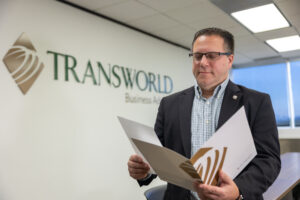
Michael Shea represents the Tampa Florida Transworld office. In business since 2005, he has established a reputation as a trusted business broker across Florida’s key markets- from Tampa to Orlando, Melbourne, and more. Over the past two decades, Michael and his team have closed over $1 Billion in sold business volume and presided over more than 450 transactions. His credentials include the IBBA Certified Business Intermediary®, and most recently, the prestigious Certified Exit Planning Advisor® (CEPA) credential.