Valuing a vending route isn’t just about counting machines — it’s about understanding cash flow, contracts, location quality, and growth potential. Whether you’re considering selling your route or planning to buy one, getting the valuation right is key to maximizing your return or securing a great deal.
The video breaks down the fundamentals of route valuation and provides real-world vending tips every operator should know. Here’s how to translate the lessons into a strategy that resonates with buyers and sellers alike.
1. Start With the Numbers: Revenue & Profit
When valuing any business, the starting point is profit — not just gross sales. For vending routes, this means:
-
Monthly Gross Sales: Total intake from all machines.
-
Net Profit: Revenue after deducting product cost, maintenance, fuel, commissions to locations, and other expenses.
Buyers focus on net profit because that’s what they’ll be paid for running the route. Sellers who show consistent net profit over time will attract stronger offers.
💡 Quick Rule of Thumb: Many vending routes are valued at a multiple of annual net profit — often around 12–24× monthly cash flow, depending on location quality and stability.
2. Location Quality Trumps Machine Count
Not all machines are created equal. A route with 30 machines in high-traffic office buildings, schools, or medical facilities can be worth far more than one with 100 machines in low-traffic sites.
Here’s why location matters:
-
High Foot Traffic = Higher Sales
-
Location contracts — ideally long-term, written agreements — make revenue predictable.
-
Buyers value routes where machines are locked in with strong location relationships.
Contracts and exclusive placement terms can substantially increase the perceived value because they reduce the risk of sudden machine removals.
3. Machine Condition & Technology Boost Value
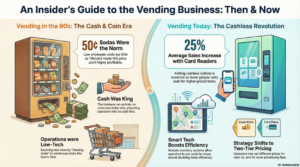
Old, coin-only machines are less attractive than newer units with:
-
Cashless payments
-
Remote sales reporting
-
Inventory telemetry
-
LED pricing screens
Machines with tech upgrades command higher valuations because they grow revenue and reduce labor costs. Buyers often pay a premium for a tech-enabled route.
4. Operational Efficiency & Scalability
A route that runs smoothly with minimal hands-on management is worth more. Sellers who:
-
Optimize restocking routes
-
Use data to guide inventory
-
Minimize downtime with preventive maintenance
…make their route more attractive. Buyers look for businesses that run without constant owner involvement.
5. Use Comparable Sales Data
One of the most reliable valuation methods is comps — reviewing similar vending route sales in your region. Industry benchmarks show that:
-
Median vending machine business revenues hover around typical small business ranges.
-
Valuation multiples relative to earnings are similar to other service-based small businesses.
This market context helps you set a competitive asking price that’s attractive to buyers and rooted in data.
6. Practical Selling Tips
If you’re preparing to sell your vending route:
✔ Clean up your books — accurate profit & loss statements inspire buyer confidence.
✔ Organize machine lists — model, age, maintenance history.
✔ Show contracts — demonstrate stability and future income streams.
✔ Highlight growth opportunities — potential locations, product mix changes, and tech upgrades.
Bottom Line: Valuation Is More Than a Formula
A vending route is about systems, relationships, and predictable income. The video’s tactics complement these fundamentals:
📍 Cash flow consistency — buyers pay for reliability.
📍 Location strength — contracts matter.
📍 Tech & efficiency — adds value beyond machine count.
If you’re selling a vending route in Tampa Bay or anywhere in Florida, understanding these details makes all the difference in commanding top dollar — and helping buyers see the true potential of the business.
Need Help Valuing or Selling Your Route?
As a business broker focused on Tampa Bay transactions, I’ve helped owners properly price and sell vending routes and other income-producing businesses. Let’s talk about your route’s value and how to position it for the best offers.
Reach out anytime — your vending business deserves a strategy built for success.
Michael Shea represents the Tampa Florida Transworld office. In business since 2005, he has established a reputation as a trusted business broker across Florida’s key markets- from Tampa to Orlando, Melbourne, and more. Over the past two decades, Michael and his team have closed over $1 Billion in sold business volume and presided over more than 450 transactions. His credentials include the IBBA Certified Business Intermediary®, and most recently, the prestigious Certified Exit Planning Advisor® (CEPA) credential.