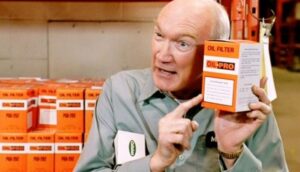
Hanging in my office in Lakeland is a painting from Tommy Boy. It never fails to get a glance and a good shift to the film. But its’ not the one I reference the most. I am speaking of the Fancy Guarantee Scene.
The Buyer’s Fear: Risk Is the Real Enemy
Tommy’s customer in the scene isn’t sold because Tommy fails to address the core fear every buyer has: What if this doesn’t work? In the movie, the customer doesn’t care about the word “guaranteed” stamped on a box—he wants assurance that the product will perform and that he won’t be left holding the bag if it doesn’t. In business, buyers feel the same way. Whether you’re selling software, machinery, or consulting services, your customer is silently asking, “What happens if this fails? Will I lose money? Time? Reputation?”
This is where a well-crafted agreement steps in. It’s not just a formality—it’s a psychological safety net. When a customer signs a contract that outlines deliverables, timelines, and contingencies (like refunds, support, or warranties), their perception of risk shrinks. They’re no longer betting on vague promises or a salesperson’s charm—they’ve got something tangible that says, “You’re covered.”
Tommy’s Mistake: All Flash, No Substance
Tommy’s downfall in the scene is that he leans too hard on the idea of a guarantee without backing it up. He waves the box around, yells about the word, and then implodes—leaving the customer more confused and skeptical than before. In sales, this is the equivalent of overpromising without proof. You can tell a customer your product is “the best” or “guaranteed to work” all day long, but without a clear agreement to define what that means, it’s just noise.
A good business agreement does what Tommy couldn’t: it provides substance. It spells out what “guaranteed” actually looks like—whether that’s a money-back clause, a service-level commitment, or a replacement policy. This clarity transforms a vague sales pitch into a concrete assurance, making the buyer feel secure enough to say yes.
Perception Is Reality
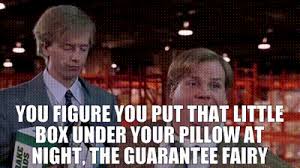
Here’s the kicker: security isn’t just about what you deliver—it’s about what the buyer perceives. In Tommy Boy, the customer walks away because Tommy’s antics amplify the perception of risk instead of reducing it. In real life, a signed agreement flips that script. It’s a signal to the buyer that you’re serious, that you’ve thought through the “what-ifs,” and that you’re willing to put your promises in writing. That perception of security can be the difference between a closed deal and a lost one.
Think about it from the customer’s shoes. Without an agreement, they’re relying on trust alone—and trust is hard to come by when money’s on the line. But with a clear contract, they’ve got a roadmap for success and a shield against failure. It’s not about distrusting you as a seller; it’s about eliminating the unknown. And when the unknown shrinks, confidence grows.
The Takeaway: Be the Anti-Tommy
Tommy Callahan’s heart was in the right place—he just didn’t have the tools to close the deal. In business sales, your agreement is that tool. It’s your chance to say, “This isn’t just talk—I’ve got your back.” By putting guarantees into actionable terms, you turn a buyer’s hesitation into certainty, their skepticism into trust.
So, the next time you’re pitching a customer, channel a little Tommy Boy energy—but skip the chaos. Offer them an agreement that makes security more than a buzzword. Because in sales, just like in brake pads, a guarantee only matters if it’s real—and a good contract makes it feel that way.
For more on buying and selling a business Contact Tampa Business Broker Michael Shea of Transworld Business Advisors at 321-287-0349 or mike@tworld.com.