As business brokers, we often encounter middle management or retiring professionals who have spent decades in large corporations and had great success. When they come to the main street world and look to run small businesses we often see a gap in understanding the difference in running one verse another. I find this analogy to be appropriate.
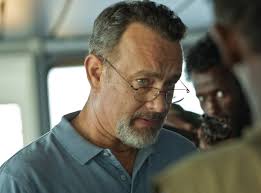
The Container Ship: Leading in a Large Company
In a large corporation, much like a container ship, the scale of responsibility is immense—managing vast teams, significant budgets, and complex operations. However, the environment is structured and predictable. Strategies are set well in advance, processes are refined over time, and the organization runs with the support of highly specialized teams. Leaders in these settings focus on optimizing existing systems, making incremental adjustments, and ensuring stability.
While the stakes are high, the pace of change is slow, and the risks are distributed across a wide base. Leadership here often involves oversight rather than hands-on execution. The captain of the container ship doesn’t need to navigate every wave—they rely on systems and experts to keep the ship on course.
This stability can create a sense of comfort. Leaders grow accustomed to the resources at their disposal, the predictability of operations, and the safety net provided by layers of support.
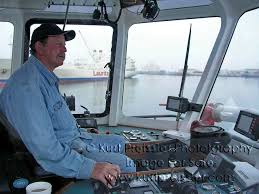
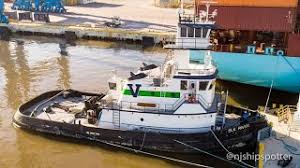
The Tugboat: Leading in a Small Business
In contrast, transitioning to lead a small business is like stepping into the role of a tugboat captain. Here, the vessel is smaller, but the impact is immediate and direct. Every decision matters. There’s no autopilot—leaders must constantly adapt to shifting conditions, whether it’s market dynamics, customer demands, or internal challenges.
Small businesses require leaders to be hands-on problem solvers. Resources are limited, teams are lean, and processes may still be evolving. Success depends on agility, creativity, and precision. Unlike in large companies where roles are clearly defined and responsibilities are shared across departments, small business leaders wear multiple hats—strategist, operator, motivator, and firefighter—all at once.
The stakes feel higher because there’s less margin for error. Every win or loss has an outsized impact on the business’s trajectory. Yet with this challenge comes significant rewards: the opportunity to drive real change quickly, build something meaningful from the ground up, and see the tangible results of your efforts.
The Mindset Shift
Executives moving from large companies often underestimate how fundamentally different leading in a small business can be. In large organizations:
•Decisions are made collaboratively with input from multiple stakeholders.
•There’s time to analyze data and deliberate before acting.
•Risks are mitigated by established processes and deep resources.
In small businesses:
•Decisions must often be made quickly with incomplete information.
•Leaders must take personal accountability for outcomes.
•Risks feel more acute because there’s less buffer for failure.
This transition requires not just new skills but also a willingness to embrace discomfort and uncertainty. It’s about letting go of the safety nets that come with scale and learning to thrive in an environment where every move counts.
Why It Matters
For those considering such a transition—whether into private equity-backed ventures or entrepreneurial roles—it’s essential to recognize that leading a smaller organization isn’t “lesser” than leading in a large corporation; it’s simply different. The scale may be smaller, but the intensity is greater. The impact is more immediate. And the potential for growth—both personal and professional—is immense.
If you’ve spent your career steering container ships but dream of captaining tugboats:
•Prepare yourself for ambiguity and rapid change.
•Develop skills in resourcefulness and adaptability.
•Embrace hands-on leadership and direct accountability.
Ultimately, transitioning from big company leadership to small business leadership isn’t just about changing jobs—it’s about adopting an entirely new way of thinking. It’s about trading stability for agility, predictability for possibility, and incremental progress for transformative impact.
If you’re ready for that challenge—welcome aboard the tugboat!
Tampa Business Broker Michael Shea is a 20 year veteran of the business brokerage industry. With over 450 businesses sold and Billions in volume he has assisted many entrepreneurs in exiting and acquiring businesses. Contact him at 321-287-0349 or email mike@tworld.com.