DOOR RASH IS RIGHT !
A Morning Reflection: Walmart Gig Drivers and What They Tell Us About the Economy
By Michael Shea, Business Broker
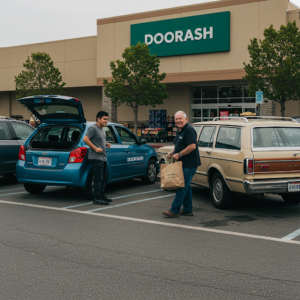
This morning, I found myself at an early appointment, sipping a lukewarm coffee and waiting for my client to arrive. As I sat in the parking lot, I couldn’t help but notice the steady stream of Walmart gig drivers pulling up to grab deliveries. Cars of all makes and models—some shiny and new, others barely holding together—lined up as folks hopped out to load groceries into their trunks. What struck me wasn’t the hustle itself, but the people doing it. Young kids, barely out of high school, mixed with retirees who looked like they should be enjoying a quieter chapter of life. It got me thinking, and honestly, it troubled me a bit.
I’ve been a business broker for years, helping folks buy and sell companies, so I’m used to reading the tea leaves of the market. But this scene hit different. Here I am, working on deals for clients who are investing hundreds of thousands into franchises or small businesses, and just a few yards away, there’s a whole other economy playing out—one that feels a lot less certain. Who are these gig drivers? Why are they here at 7 a.m. on a Tuesday? And what does it mean for the bigger picture—the housing market, consumer spending, and the businesses I help value every day?
The demographic mix was what really threw me. You’ve got the young ones—20-somethings with energy to burn, probably juggling college loans or trying to scrape together rent money. Then there’s the older crowd—folks in their 60s or 70s, who I’d wager aren’t doing this for fun. I couldn’t shake the feeling that this gig work, for both groups, might be less of a choice and more of a necessity. And that’s where my mind went straight to housing costs and the economy.
Around here, rents and home prices have been climbing faster than a lot of paychecks can keep up. I see it in the numbers when I’m valuing a business—rising operational costs, tighter margins, and customers with less disposable income. For these gig drivers, I wonder how many are piecing together multiple side hustles just to cover a one-bedroom apartment or a mortgage payment. The young ones might be delaying buying a home altogether, stuck in that renter’s limbo. The older ones? Maybe they’re back in the workforce because retirement savings didn’t stretch as far as they’d hoped, especially with inflation nibbling away at fixed incomes.
It’s not just a personal struggle—it’s a market signal. If a chunk of the workforce, young and old, is leaning on gig jobs like Walmart deliveries, what does that say about consumer confidence? These are the same people shopping at the businesses I broker. If they’re stretched thin, they’re not spending on gym memberships, dining out, or big-ticket items. That trickles up to the small business owners I work with, who are already wrestling with labor shortages and supply chain headaches.
I’m not an economist, but I’ve brokered enough deals to know stability matters. Seeing this mix of ages in the gig game makes me worry we’re looking at a bigger disconnect—wages and housing costs out of sync, retirement security fraying, and a generation of young adults who might not hit the milestones their parents did. For the market, it’s a red flag. Businesses thrive when people have money to spend, not when they’re hustling dawn to dusk for basics.
As I finished my coffee and headed into my meeting, I couldn’t shake the image of those drivers. It’s a snapshot of resilience, sure—people adapting, making it work. But it’s also a wake-up call. For me, as a broker, it’s a reminder to dig deeper into the economic currents when I’m advising clients. For all of us, it’s worth asking: What kind of economy are we building if this is who’s keeping it moving? I don’t have the answers, but I know it’s a question I’ll be chewing on for a while.